Aviation Safety in 2025: Perspective, Progress, and the Lessons We Can’t Ignore
By John Gabriel
As we approach the end of 2025, aviation safety has been a prominent—and often emotional—topic across the industry. Several high-profile accidents this year have drawn intense public attention and sparked renewed debate about whether aviation safety is improving or deteriorating.
Accidents such as Air India 171, the Potomac mid-air collision, the Toronto runway rollover, and the Philadelphia air ambulance crash occurred within a relatively short period of time and were widely covered by the media. The clustering and severity of these events made the first half of the year particularly challenging for public confidence in aviation safety. More recently, UPS 2976 drew a lot of media attention focused on the airworthiness of an aging fleet of aircraft and the tragic crash of former NASCAR driver Greg Biffle leaves many questions about small owner - operator flight operations.
However, perspective matters.
Putting 2025 Into Statistical Context
When we step back and look at the data, the picture becomes more nuanced. Based on overall accident counts, 2025 is not statistically worse than recent years and, in fact, may be on pace to record one of the lowest total accident rates since 2020.
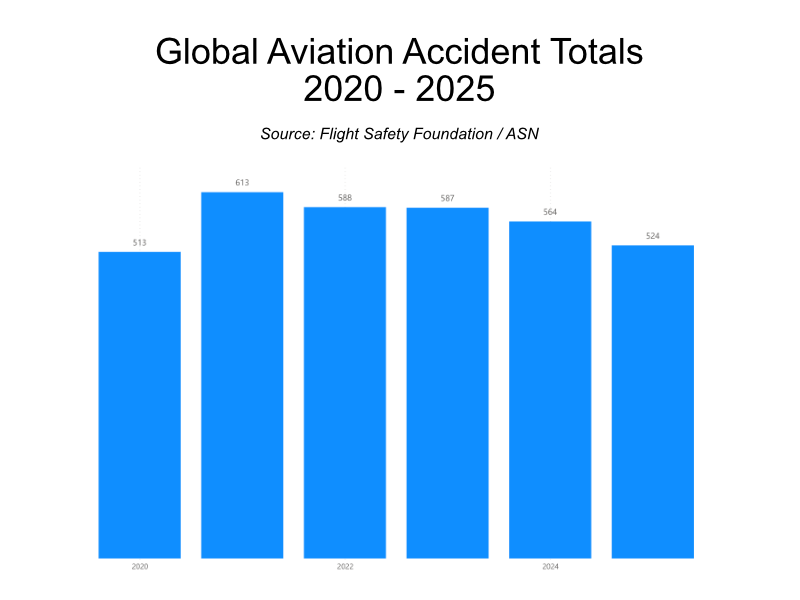
2025 accident rates have decreased YOY since 2021
That said, 2025 has seen a higher number of fatalities than recent years, largely driven by large-capacity airline accidents, which naturally carry greater consequences when something goes wrong.
This contrast—fewer accidents overall but higher fatality counts—helps explain why public perception has skewed so negatively. Tragic, highly publicized events leave a lasting impression, even when broader safety trends remain stable or improving.
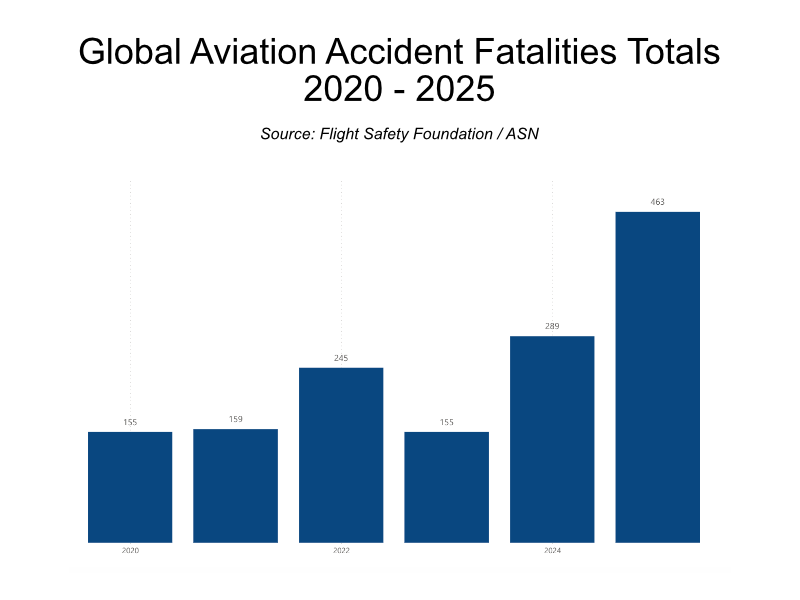
Unfortunately, large - capacity airline accidents contributed to a higher number of fatalities
Perception vs. Reality in Aviation Safety
The heightened visibility of these accidents has led many to believe that aviation safety has degraded in 2025. Statistically, that is not the case. However, accidents—especially serious ones—often reveal systemic weaknesses, whether in training, oversight, decision-making, or organizational culture.
Aviation safety has always been driven by a simple goal: zero accidents. While perfection is aspirational, every incident provides an opportunity to identify deficiencies, correct them, and prevent future occurrences. The real risk lies not in acknowledging these weaknesses—but in failing to learn from them.
Safety Trends of Concern in Business Aviation
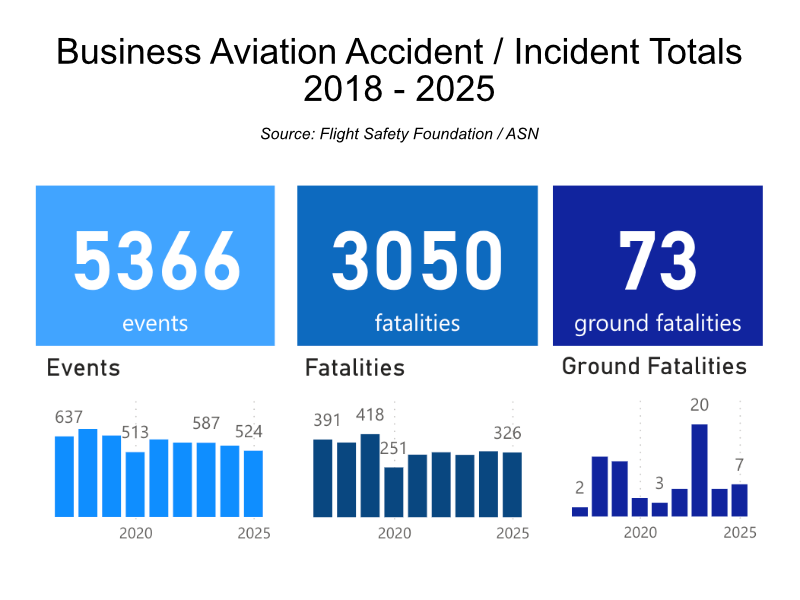
Within business aviation, several safety trends deserve particular attention. While there are many areas where improvements can be made, two stand out: training quality and human performance limitations, including fatigue.
Owner-Pilot and Owner-Operator Accidents: An important Piece of the Puzzle
In addition to airline and commercial operations, 2025 has also seen several notable accidents involving small aircraft flown by owner-pilots or owner-operators, which deserve separate consideration. These events often receive significant media attention due to the prominence of those involved, yet they operate under a very different risk profile than commercial or professionally crewed flights.
Earlier this year, a tragic accident in California involving a music industry executive highlighted the inherent risks associated with single-pilot, owner-operated aircraft—particularly when operating in complex airspace, challenging weather conditions, or high-performance aircraft. More recently, the crash involving NASCAR driver Greg Biffle again brought attention to general aviation owner-operators and the unique safety considerations they face. Investigations into these accidents are ongoing—or in some cases incomplete—and it is important to avoid speculation or premature conclusions. However, it does bring up the fact that these operations often lack many of the structural safety layers present in larger flight operations, such as multi-pilot crews, formalized dispatch, standardized training programs, and robust Safety Management Systems - all important pieces of the safety puzzle.
As these events demonstrate, owner-pilot and owner-operator flying magnifies the importance of training quality and decision-making discipline. Unlike commercial operations, where layered oversight and standardized procedures provide built-in safeguards, owner-operators often rely heavily on their own judgment, preparation, and proficiency.
High-profile accidents bring renewed attention to aviation safety overall, but they also highlight where improvements can—and must—be made. Addressing training quality, emphasizing real-world decision-making, and reinforcing disciplined operational habits are especially critical in owner-operated flying. Ultimately, these incidents should serve not as cautionary headlines, but as reminders of the responsibility that comes with the privilege of flying.
Training and Human Factors
This reality places an even greater focus on the current state of flight training, - which, when operating nominally - can help to address many of the contributing factors of the accidents. However, the current training environment across parts of the industry is under strain. For owner-operators, inconsistent training standards, limited scenario-based instruction, and an overreliance on minimum regulatory requirements leave gaps that become most apparent in high-workload, high-risk situations. For pilots of any experience level and at operations large or small, there is little margin for error when those gaps surface. Far too often the goal of training is to “check the boxes” and move on. Far too often, the shortage of qualified instructors cause a degradation of training quality - regardless of training facility. The net result: larger gaps in flight crew knowledge, a lesser degree of proficiency, and, as we’ve seen above: less confidence when challenged by unforeseen in - flight events.
At the same time, human factors play a role across personnel outside of the flight deck. For instance, duty time limits and fatigue mitigation for essential personnel—such as maintenance technicians, cabin crew, and dispatchers—remain areas of concern. These folks play a vital part in the overall safety of each flight and are just as important as the flight crew at the controls. Historically, safety considerations have been largely overlooked within these groups. It is time for that to change - and it begins with organizational culture.
True safety is the result of a collective effort from management down to all integral roles at a flight department. Each discipline contributes a critical layer of defense, and gaps emerge when any one group is excluded from the safety conversation. For a safety culture to be truly effective, the organization must buy in across all levels and job function, empowering every team member to speak up, raise concerns, and prioritize sound decision-making without fear of repercussion. When safety is treated as a shared responsibility, organizations are better positioned to identify risk early, strengthen operational resilience, and sustain long-term safety performance - it also breeds a higher degree of professionalism.
Professionalism Is Non-Negotiable
Running late? Flying fast to save a few seconds on final won’t even be noticed by your passengers—and it won’t be worth it. Didn’t have time to send your crew a proper trip briefing? That’s rarely a time issue and more often a priority issue. Skipped part of the pre-flight inspection because nothing has ever been out of tolerance before? This may be the time it is. Did a pilot avoid a go-around to spare an ego? The consequences of that decision can be far more damaging. These are all examples of degraded discipline and a lack of professionalism.
Discipline and professionalism are not situational values. They must be non-negotiable, regardless of schedule pressure, passenger expectations, or perceived inconvenience.
An organization with a healthy safety culture doesn’t just advocate for professionalism and discipline in the operation— they insist on it.
A Closer Look at Recent Runway Overruns
Recent incidents underscore how these issues manifest operationally. As an example, over the past quarter alone, these three runway overruns occurred:
Boca Raton, Florida
Palwaukee (Chicago area), Illinois — on the same day
Kentucky — approximately ten days later
All three events shared striking similarities:
No mechanical failures — all aircraft were airworthy
Excessive speed on final approach, confirmed by flight data
Touchdowns occurred too far down the runway
It’s easy to reduce these events to surface-level explanations: improper approach speed, missed touchdown zones, or flawed landing distance calculations. While all of those factors are valid, they describe what happened, not why it happened.
The Role of Flight Discipline
At the core of these incidents is a deeper issue: flight discipline.
Why was the aircraft not stabilized on approach?
Why wasn’t corrective action taken when deviations became apparent?
Why was a go-around not initiated after overshooting the intended landing point?
Flight discipline speaks to decision-making under pressure and the willingness to act—even when it’s uncomfortable. A disciplined crew briefs the approach thoroughly, understands runway conditions and landing performance, actively calls out deviations, and executes a go-around without hesitation if the approach becomes unstable.
We don’t yet know the exact cockpit conversations in these cases, but a professional, disciplined crew holds itself accountable to standards—every flight, every time.
Looking Ahead
While 2025 has been a challenging year from a perception standpoint, the data tells a more balanced story. Aviation remains exceptionally safe—but only if the industry continues to uphold discipline, invest time to modernize, enhance and improve flight crew training, and to confront systemic weaknesses honestly.
Safety is not static. It requires vigilance, humility, and a relentless commitment to improvement. The lessons of 2025 must not be forgotten—and if applied correctly, they can make our industry stronger moving forward.
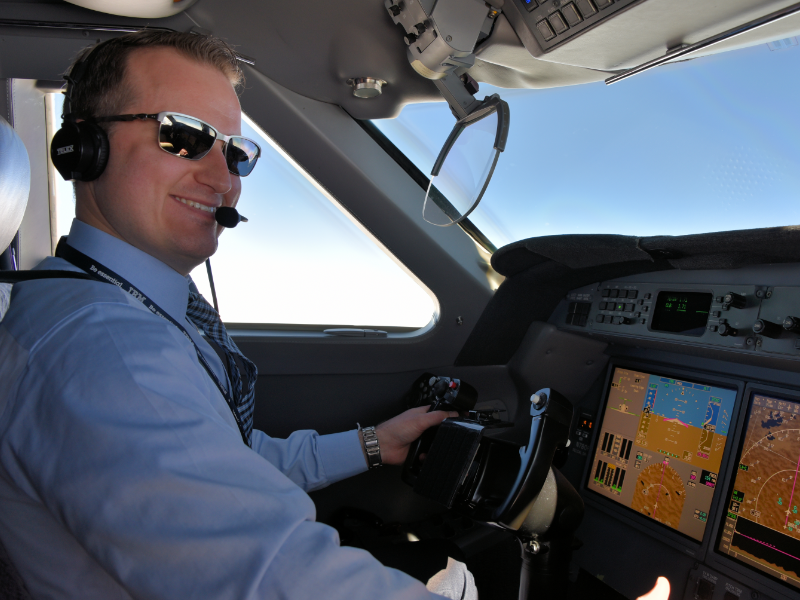
John Gabriel is the President of CBAG. He is a Gulfstream and Falcon rated pilot and is the Director of Safety & Compliance for Corporate Aviation - a CT based charter brokerage. He has written SMS manuals, SOP and developed/administered safety and ASAP programs for both Fortune 50 and small corporate and private flight departments.