Fuel Surcharges Return to Charter Market as Oil Volatility Reshapes Pricing
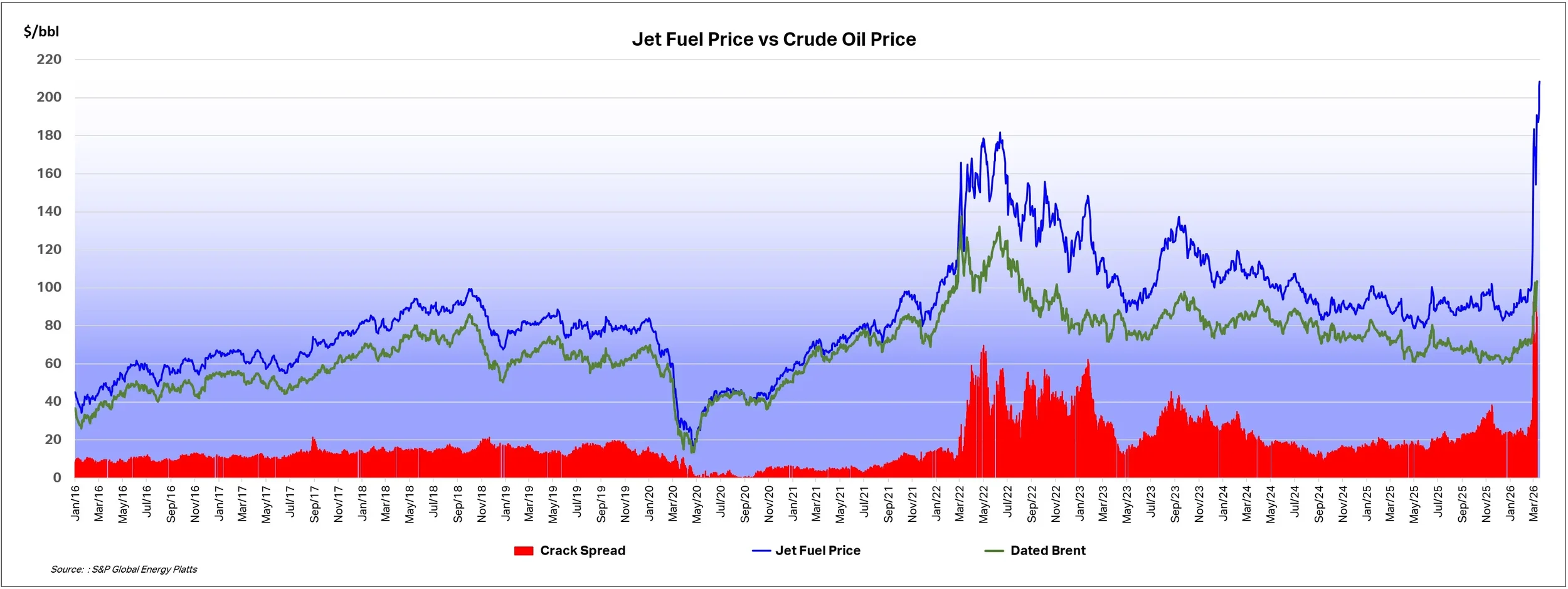
Rising global oil prices tied to the ongoing Iran conflict are driving a renewed shift in business aviation pricing, with fuel surcharges reemerging across the charter market after several years of relative absence.
For operators, brokers, and clients, the change reflects a more volatile operating environment—one where trip costs are becoming increasingly dynamic, and in some cases, subject to adjustment even after booking.
A Pricing Mechanism Reintroduced
Fuel surcharges were once a common component of charter pricing but had largely faded in recent years as operators absorbed moderate fuel fluctuations into standard hourly rates.
That dynamic is changing.
With oil markets reacting sharply to geopolitical instability—particularly concerns surrounding supply routes such as the Strait of Hormuz—operators are once again separating fuel costs from base pricing in order to manage risk exposure.
“The stability we’ve seen over the past several years just isn’t there right now,” said John Gabriel of Connecticut-based charter brokerage Corporate Aviation. “Operators are having to react much more quickly to fuel price swings.”
Post-Booking Adjustments Becoming More Common
One of the more notable developments is the timing of these charges.
Rather than being fully incorporated into initial quotes, fuel surcharges are increasingly being applied after a trip has already been quoted, accepted, and booked.
According to Gabriel, this is no longer an isolated occurrence.
“We’ve seen several instances where a trip was confirmed at one price, and then a fuel surcharge was applied afterward,” he said. “It speaks to how quickly conditions are changing.”
While most charter agreements include provisions that allow for adjustments tied to fuel costs, the frequency of these post-booking changes marks a shift from recent norms.
Typical Surcharge Ranges Emerging
Across the market, fuel surcharges are beginning to standardize within a general range, though variability remains based on aircraft type and operator.
Recent activity indicates:
$200 to $400 per flight hour as a typical surcharge range
Higher exposure for larger, long-range aircraft
Operator-specific differences based on fuel procurement and hedging strategies
“These aren’t insignificant numbers, especially on longer trips,” Gabriel noted. “It can meaningfully change the total cost of a mission.”
Broader Operational Pressures
The return of fuel surcharges is one piece of a larger operational picture.
Operators are simultaneously managing:
Increased fuel costs driven by global supply uncertainty
Longer routing due to airspace restrictions
Higher repositioning expenses
Reduced predictability in trip planning
Together, these factors are compressing margins and accelerating the need for more flexible pricing models.
A More Dynamic Charter Environment
For clients, the reintroduction of fuel surcharges reinforces the importance of understanding how charter pricing is structured—and how it can change.
“Charter has always been dynamic, but we’re seeing a heightened level of variability right now,” said Gabriel. “Transparency and communication are critical so there are no surprises.”
For brokers and operators, the focus is shifting toward balancing cost recovery with client expectations in an increasingly fluid market.
Looking Ahead
While fuel surcharges may fluctuate with market conditions, their return signals a broader shift in business aviation economics.
Fuel—long one of the industry’s most significant cost drivers—is once again front and center, with geopolitical events playing a direct role in day-to-day operations.
For the charter market, the message is clear: pricing stability can no longer be assumed, and adaptability will be key in the months ahead.